Brewed from the Land: How NZ Craft Beer Is Becoming a Vehicle for Māori Storytelling
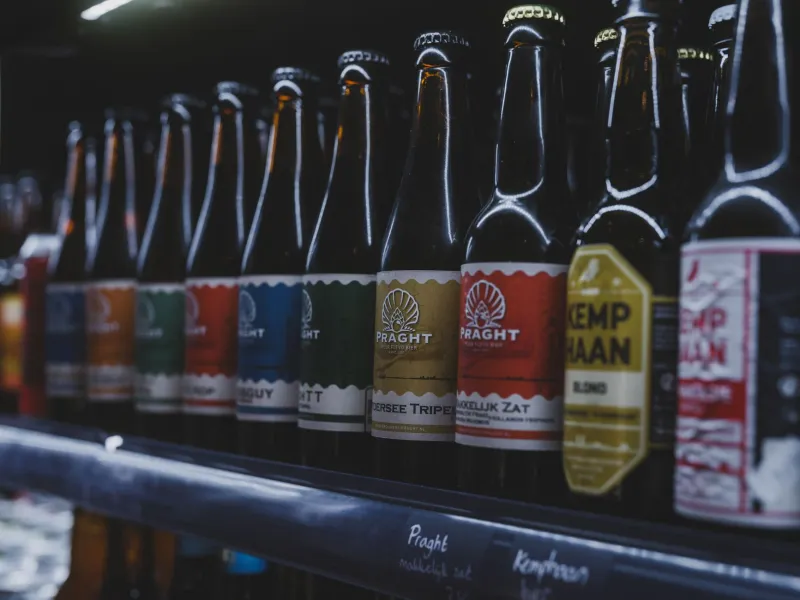
There's a moment, cracking open a cold one from certain New Zealand craft breweries, where you realise the experience goes well beyond whatever's happening on your palate. The label tells you something. The name asks you to say it properly. The ingredient list reads like a whakapapa of the land itself — kawakawa, horopito, mānuka, harakeke. You're not just drinking a beer. You're being introduced to a place, a people, and a practice that stretches back centuries.
This is the Māori craft beer renaissance, and it's quietly becoming one of the most compelling examples of culturally-grounded entrepreneurship happening across the Tasman.
More Than a Marketing Angle
Let's be clear about something upfront: this isn't about slapping a koru on a label and calling it indigenous. The breweries leading this movement are doing the hard, considered work of genuine cultural integration. Many are Māori-owned or run in close partnership with iwi and hapū. The ingredients they use aren't chosen for novelty — they're sourced with knowledge, often from growers who understand the ecological and ceremonial significance of each plant.
Kawakawa, for instance, is one of the more frequently appearing native botanicals in these brews. In te ao Māori, it carries deep meaning — used in ceremony, in healing, in marking grief and celebration alike. When a brewery incorporates kawakawa into a pale ale or a saison, and takes the time to explain that context on the packaging and in their storytelling, the ingredient transforms. It becomes a conversation starter. A point of connection. A reason to learn something.
Horopito — sometimes called the New Zealand pepper tree — brings heat and complexity that craft beer nerds absolutely lose their minds over. But beyond the flavour, it carries its own narrative weight, its own place in rongoā Māori (traditional Māori medicine). The best of these breweries aren't hiding that history. They're leading with it.
Design as Cultural Text
Walk into any decent bottle shop in Melbourne or Sydney these days and you'll notice Australian craft beer has gotten very good at label design. Bright, bold, often irreverent. But the visual language coming out of certain NZ breweries hits differently.
When Māori design principles — koru, tāniko patterns, tā moko-inspired linework — are applied with genuine cultural authority, the result isn't just aesthetically striking. It communicates something about the relationship between the maker and the whenua (land). It signals that the product exists within a framework of values that goes beyond profit margins and tap handle real estate.
For Australian consumers who've grown increasingly savvy about authenticity — who can smell a cynical cultural grab from a kilometre away — this kind of visual integrity registers. It's part of why these beers are finding enthusiastic audiences at festivals like GABS (Great Australasian Beer SpecTAPular) and in the curated sections of independent bottle shops from Fremantle to Fitzroy.
The Knowledge Behind the Brew
One of the more fascinating dimensions of this movement is how it's prompting a recovery and application of traditional ecological knowledge. Knowing which kawakawa to harvest, when, and how, isn't information you find on a supplier website. It requires relationship — with elders, with land, with seasonal rhythms that industrial agriculture has largely severed.
Some breweries are working directly with rongoā practitioners and environmental custodians to ensure their sourcing is both ecologically responsible and culturally appropriate. That collaboration creates a supply chain that looks nothing like the global commodity networks most breweries rely on. It's slower, more relational, and arguably more resilient.
For Australian creators watching this model — whether they're in food, fashion, or any other product-based creative industry — there's a genuine blueprint here. Not to copy, but to be inspired by. The question it poses is a good one: what does it look like to build a product that's genuinely grounded in the knowledge systems of the land you're working on?
What Aussie Craft Culture Can Take From This
Australia has its own profound Indigenous cultural heritage, and its own — often fraught — history of that heritage being appropriated, misrepresented, or simply ignored by mainstream commercial culture. The NZ craft beer movement offers a different possibility: what happens when Indigenous knowledge is centred, not as decoration, but as the actual intellectual and creative foundation of a product?
Australian breweries have occasionally experimented with native botanicals — lemon myrtle, wattleseed, finger lime — but the depth of cultural integration seen in the best NZ examples is still relatively rare on this side of the Tasman. That gap is worth sitting with. It's not an accusation. It's an invitation.
The conversations happening in the Australian craft beer community about First Nations collaboration are growing. Events like NAIDOC Week increasingly feature product launches and collaborations that attempt to move beyond tokenism. But the NZ model — where Indigenous ownership, knowledge sovereignty, and cultural narrative are baked in from the start rather than added later — offers a more structurally solid approach.
A Drink That Does the Work
What's genuinely exciting about this movement, from a Tūhono Arts perspective, is that it demonstrates how creative and cultural expression doesn't have to live only in galleries, on stages, or across streaming platforms. It can live in a 375ml can. It can sit on a bar counter in Newtown or Collingwood and quietly do the work of connection — sparking curiosity, prompting questions, making someone reach for their phone to look up what horopito actually is.
That's storytelling. That's culture-making. It just happens to be delicious.
The breweries doing this well aren't waiting for the mainstream to validate their approach. They're building audiences who get it — who appreciate that when they choose one of these beers, they're participating in something larger than their own thirst. They're supporting an ecosystem of Māori entrepreneurship, environmental stewardship, and cultural continuity.
For Australian craft beer enthusiasts looking to expand their palate and their perspective, the invitation is open. The next time you're browsing the imports section, look for the names that ask something of you. The labels that tell a story. The ingredients that come with a history.
That beer might just be the start of something.