Beyond the Handshake: Why NZ Creative Collectives Are Changing How Australians Think About Working Together
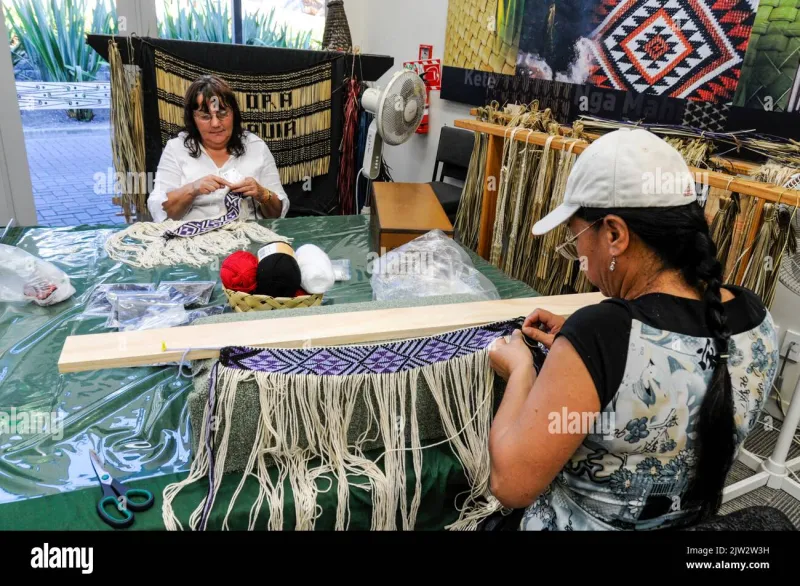
There's a word that keeps coming up when you talk to New Zealand creatives about how they work: tūhono. It means to connect, to link, to bind together. And while it might sound like a lofty concept, the artists and collectives coming out of Aotearoa are living proof that it translates into something very practical — creative partnerships that don't fall apart after the first project wraps.
For a lot of Australian artists, the standard collaboration story goes something like this: two creatives meet at a festival or via a DM, get excited about a shared idea, produce something together, and then quietly drift apart when the next opportunity pulls them in different directions. It's not malicious. It's just how the industry tends to work — fast, transactional, and always chasing the next thing.
But something different is happening across the Tasman, and it's catching the attention of Australian makers who are tired of that cycle.
The Collective Model, Done Differently
New Zealand's creative sector has long operated within tight geographic and economic constraints. A country of five million people spread across two main islands doesn't have the luxury of a sprawling, siloed industry. Necessity has bred a culture of genuine interdependence — designers work alongside musicians, writers collaborate with visual artists, filmmakers loop in community storytellers from the jump.
What's emerged isn't just a workaround for limited resources. It's a genuinely distinctive philosophy about what collaboration is for.
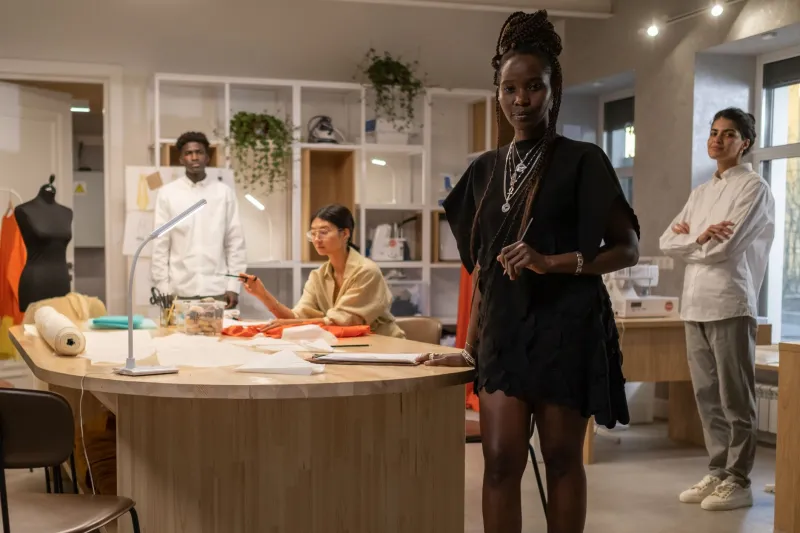
Take the model you see in collectives like Auckland's cross-disciplinary studio spaces, where artists from wildly different fields share not just physical space but creative briefs, feedback processes, and even income structures. The idea isn't to blur individual identity — it's to build something together that none of them could produce alone, and to do it in a way that's sustainable enough to go again next time.
For Aroha Ngata, a Wellington-based textile artist who has worked with several Australian fashion labels over the past three years, the difference comes down to what happens before the work starts. "In a lot of the Australian projects I've been brought into, the conversation is about deliverables from day one," she says. "In the way I was taught to work, you spend real time on the relationship first. You figure out if your values actually line up. That's not a soft thing — it's the whole foundation."
When Distance Becomes an Asset
You'd think the Tasman Sea would complicate things. And sure, time zones and travel costs are real. But a number of NZ-AU creative teams have found that the geographic gap actually forces a kind of intentionality that closer collaborations can skip over.
Sydney-based graphic designer Mia Tran started working with a Christchurch-based illustrator collective two years ago after meeting at a design conference in Melbourne. What began as a single editorial project has since grown into an ongoing creative partnership spanning three commercial clients and a self-initiated zine series.
"We couldn't just pop around for a coffee, so every conversation we had was on purpose," Mia explains. "We got really clear about what we each brought to the table, what we wanted out of it, and how we'd handle disagreements. It felt almost old-fashioned — like we were actually building something."
That deliberateness, she says, is something she's now trying to bring into her collaborations with people who are five minutes away.
The Values Layer
One of the things that makes NZ creative collaboration models distinct — and harder to simply copy — is the values layer underneath them. Many of the most successful collectives draw on tikanga Māori principles around reciprocity, collective responsibility, and the long view. These aren't just philosophical add-ons; they shape how decisions get made, how credit gets shared, and how conflicts get resolved.
For Australian creators engaging with NZ partners, this can be a genuine revelation. The idea that a collaboration should have a shared ethical framework — not just a shared aesthetic or a shared deadline — is still relatively uncommon in mainstream Australian creative industries.
Melbourne-based filmmaker and producer Jonah Rees has been working with a Māori-led documentary collective for the past eighteen months on a project exploring Pacific diaspora communities in both countries. He's candid about how much the experience has shifted his thinking.
"I came in with a pretty standard producer mindset — scope, timeline, budget," he says. "But the way they approached it was almost the inverse. They started with: who are we accountable to? What's the responsibility we're carrying? Once we'd worked through that, the practical stuff felt way more grounded. I don't think I can go back to doing it the other way."
What Australian Creators Are Actually Taking Home
The influence isn't just anecdotal. Across Australian cities, you're starting to see structural shifts that trace back — at least in part — to NZ models. Collective studio arrangements are gaining traction in Brisbane and Adelaide. Cross-disciplinary project briefs are becoming more common in grant applications. And there's a growing conversation in Australian arts funding circles about how to support long-term creative relationships rather than just one-off outputs.
None of this is purely a New Zealand export, of course. But the NZ creative community has been doing this long enough, and visibly enough, that it's serving as a kind of proof-of-concept for Australian peers who want to try something different.
Some of it is also about scale. The collaborative instincts that developed in Aotearoa out of necessity are starting to look like genuine advantages in an era when Australian audiences are increasingly hungry for creative work that feels human, considered, and connected to something real.
Building Partnerships That Go the Distance
So what does it actually take to build a creative partnership on the NZ model? The artists we spoke to kept circling back to a few consistent ideas.
First: slow down the beginning. Spend more time on the relationship before you start talking about the project. Find out what the other person actually cares about, not just what they're good at.
Second: be explicit about values. Don't assume shared aesthetics mean shared ethics. Have the uncomfortable conversation early about how decisions get made, how credit works, and what happens when things go sideways.
Third: think in seasons, not sprints. The most durable NZ-AU creative partnerships aren't built around a single project — they're built around an ongoing creative relationship that can hold multiple projects over time.
And finally: treat the distance as a design feature. The extra effort required to maintain a cross-Tasman collaboration forces a level of intentionality that makes the partnership stronger, not weaker.
It's not a magic formula. But it's a genuinely different way of thinking about what creative partnership is for — and why it might be worth doing properly in the first place.
For Australian creators who've been through one too many promising collaborations that quietly dissolved, it might be exactly the reset they're looking for.