Not a Motif, a Movement: How Indigenous Kiwi Designers Are Redefining What Counts as Authentic in Australia
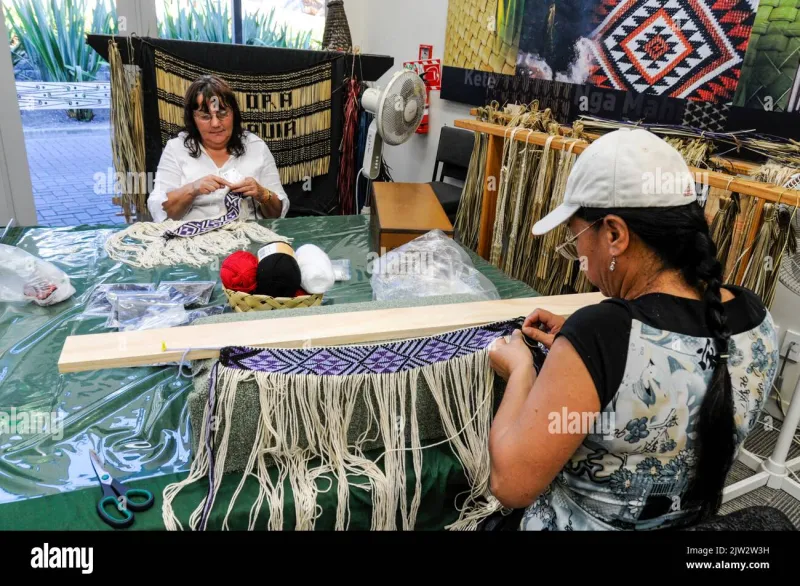
Photo: Maori weaver traditional textile craft New Zealand studio, via c8.alamy.com
Let's be honest about something uncomfortable: the Australian design industry has a complicated history with Indigenous aesthetics. Patterns, motifs, and visual languages drawn from First Nations cultures have appeared on everything from tea towels to high-end homewares — often without the involvement, consent, or compensation of the communities those cultures belong to. It's a problem the industry has been slowly, sometimes reluctantly, confronting.
Into this context comes a wave of Māori and Pasifika designers, weavers, and makers from Aotearoa who are doing something quietly radical. They're not just bringing beautiful work to Australian markets — they're modelling an entirely different way of thinking about what Indigenous design can and should be. And the Australian creative industry is paying attention.
The Difference Between Inspiration and Appropriation
This is the conversation that needs to happen before any other. Cultural appropriation in design isn't always malicious — in fact, it's often the product of genuine admiration filtered through ignorance. But admiration without understanding, without relationship, without accountability, produces work that extracts the aesthetic surface of a culture while discarding everything that gives it meaning.
Māori design isn't decoration. The koru isn't just a pleasing spiral. Tā moko isn't a pattern to be adapted for a hotel lobby. These visual languages carry whakapapa — genealogy, relationship, responsibility. When they're reproduced outside of that context, something essential is lost, and the communities who hold those traditions are diminished in the process.
What makes the current moment significant is that Indigenous designers from Aotearoa are entering Australian markets not just with products, but with this understanding fully articulated. They're not asking Australian consumers to simply buy their work — they're inviting them into a different relationship with design altogether. One where provenance matters, where the story behind an object is inseparable from the object itself, and where the maker's cultural authority is part of what you're honouring when you bring something into your home.
What Authentic Indigenous-Led Design Actually Looks Like
The businesses making waves in Australian markets right now are as diverse as the communities they come from. There are Māori weavers whose work in harakeke (flax) and other traditional materials has found homes in high-end Australian interiors. There are Pasifika textile designers whose fabric work blends Pacific visual traditions with contemporary fashion sensibilities in ways that feel genuinely innovative rather than nostalgic. There are jewellers, ceramicists, and printmakers whose practices are rooted in specific cultural knowledge and expressed in forms that resonate with contemporary Australian buyers.
What these makers share is a refusal to separate their cultural identity from their commercial identity. Their Indigeneity isn't a marketing angle — it's the foundation of the work. And that's precisely why the work has the power it does. Australian consumers who are increasingly sceptical of greenwashing and cultural tokenism can feel the difference between something that was designed to look Indigenous and something that actually is.
Challenging the Australian Market to Do Better
Here's where things get pointed. The presence of authentic Indigenous-led design businesses from Aotearoa in Australian markets isn't just an opportunity for those businesses — it's a challenge to the Australian design industry as a whole.
Australia has its own rich tradition of First Nations design, and its own ongoing, complicated conversation about how that design is represented, commercialised, and protected. The ethical frameworks that Māori and Pasifika designers bring with them — built on concepts like kaitiakitanga (guardianship) and the understanding that cultural knowledge belongs to communities, not individuals — offer a genuinely useful model for how those conversations might develop.
This isn't about importing Aotearoa's answers wholesale. Australia's First Nations cultures are distinct, and the solutions that serve Māori communities won't automatically translate. But the rigour with which leading Māori designers have articulated the ethics of cultural representation — who gets to use what, under what conditions, with what acknowledgement — provides a vocabulary and a framework that Australian conversations about Indigenous design could meaningfully draw on.
Some Australian designers and retailers are already engaging with this. Collaborations between NZ Indigenous makers and Australian First Nations artists are beginning to emerge — not as novelties, but as genuine creative partnerships built on mutual respect and shared values. These collaborations are worth watching closely, because they represent a model for what ethical cross-cultural creative exchange can look like.
The Consumer's Role in This Shift
None of this happens without consumers who are willing to make different choices. The market for authentic Indigenous-led design exists because a growing number of Australian buyers are asking harder questions about where things come from, who made them, and what purchasing them actually supports.
This is encouraging, but it requires ongoing education. Knowing the difference between a product that uses Indigenous-inspired motifs and one that was made by an Indigenous designer with community backing isn't always obvious — particularly in an online retail environment where provenance can be obscured or misrepresented. Seeking out makers who are transparent about their cultural credentials, their community connections, and their approach to cultural knowledge isn't just good ethics; it's good taste.
Platforms and retailers also carry responsibility here. Stocking authentic Indigenous-led design means actively seeking out makers from those communities, paying fair prices, and resisting the temptation to substitute cheaper, derivative alternatives when they're easier to source. It means treating Indigenous design as a living, evolving creative tradition rather than a static aesthetic category.
A Movement, Not a Moment
What's happening right now, as Māori and Pasifika designers from Aotearoa build genuine footholds in Australian creative industries, is bigger than a trend. It's a recalibration of what the Australian design landscape values and who gets to shape it.
The makers driving this shift aren't asking for a seat at someone else's table. They're setting their own tables and inviting Australian consumers to come and sit down — on their terms, with their stories, and with the full weight of their cultural knowledge behind every piece they put into the world.
That's not just good design. That's a different way of thinking about what design is for.