Where Walls Come Down: The NZ Creative Hub Model Reshaping How Australians Think About Shared Space
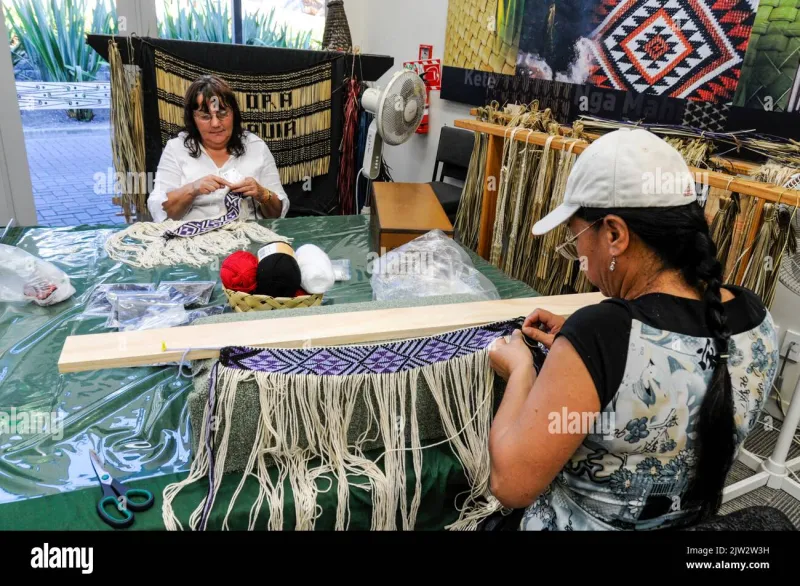
There's a moment that Aroha Ngāta, co-director of a shared creative studio in Tāmaki Makaurau, loves to describe. It's a Tuesday afternoon, and a textile artist is mid-conversation with a sound designer, who happens to be borrowing a corner of the studio to test acoustics. Neither of them planned to collaborate. But by Friday, they're co-pitching a multisensory installation to a community festival. "That's the whole point," she says. "You can't engineer that kind of thing. You just have to build the conditions for it."
This is the quiet revolution happening across New Zealand's creative landscape — and it's one that Australian cultural organisations are increasingly trying to replicate.
What Makes These Spaces Different
New Zealand's collaborative arts hubs aren't just co-working spaces with better lighting. They tend to be deliberately interdisciplinary, often founded on kaupapa that centres community access, cultural safety, and creative risk-taking. Many are rooted in iwi relationships or Pacific community networks, which gives them a social architecture that purely commercial spaces can't manufacture.
In Wellington, spaces like Toi Pōneke have long operated on the principle that artists across disciplines — visual, performing, digital — benefit from physical proximity. The model isn't about efficiency. It's about productive friction. When a choreographer shares a hallway with a ceramicist, the work that emerges tends to be stranger, more interesting, and more connected to lived experience than what either might produce in isolation.
What's notable is the intentionality behind the programming. These hubs don't just rent desks — they host cross-disciplinary residencies, facilitate community-facing events, and actively work to lower the barriers between "professional" artists and emerging practitioners. The result is an ecosystem rather than a venue.
The Australian Uptake
In Melbourne and Sydney, arts administrators have been watching this model with genuine interest. Several community arts organisations in Victoria have begun restructuring their physical spaces to encourage what one program manager at a Brunswick-based creative centre described as "serendipitous overlap" — the kind of unplanned connection that New Zealand hubs seem to generate almost organically.
"We'd been running discipline-specific programs for years," she told us. "Visual arts over here, music over there, theatre in the back room. And then we started looking at what was happening in places like Auckland and Wellington, and we realised we'd been accidentally building silos."
The shift isn't just aesthetic. It reflects a deeper rethinking of what a cultural hub is actually for. If the goal is community connection — genuine tūhono — then the physical and programmatic design of a space needs to reflect that. Walls, literal and metaphorical, need to come down.
In Brisbane, a First Nations-led arts organisation recently opened a multi-use creative space explicitly modelled on the kaupapa-driven approach they'd observed in Māori and Pacific arts centres across the Tasman. The founding director spent time in Aotearoa before the build-out, visiting spaces and talking to operators. "The thing that struck me," she said, "was how the values were baked into the architecture. It wasn't an afterthought. The space itself communicated something about who it was for."
The Economics of Collaboration
Sceptics might argue that collaborative spaces are a nice idea until the rent comes due. And it's true that many of these hubs operate on tight margins, relying on a mix of council funding, philanthropic support, and earned income from events and residencies.
But the operators we spoke to push back on the idea that financial sustainability and community mission are in tension. In fact, several pointed to the collaborative model as a competitive advantage. When a space becomes genuinely useful to a diverse range of practitioners, its community advocacy is built-in. Artists talk. Word spreads. Waiting lists form.
Aroha Ngāta notes that her studio has never needed to advertise for residents. "Our artists bring the next artists. That's community. You can't buy that with a marketing budget."
There's also a growing recognition among Australian arts funders that siloed, discipline-specific infrastructure is increasingly hard to justify. As Creative Australia and state arts bodies shift their frameworks toward cross-sector collaboration and community impact, the NZ hub model starts to look less like an idealistic experiment and more like a sensible investment.
What Gets Lost in Translation
It would be naive to suggest that the New Zealand model transplants perfectly. Context matters enormously. The tikanga underpinning many Aotearoa hubs isn't a design feature you can import wholesale — it emerges from specific cultural relationships and obligations that take years to build.
Several Australian practitioners we spoke to were candid about this. The risk, they acknowledged, is cargo-culting the aesthetic of collaborative space without doing the deeper relational work. You can build an open-plan studio with good coffee and a communal library, but if the community governance isn't there — if the space isn't genuinely accountable to the people it claims to serve — it becomes just another gentrification prop.
The best Australian interpretations of this model seem to understand this. They're not copying New Zealand; they're learning from it while rooting their own approach in local relationships, local history, and local need.
The Feeling in the Room
What both NZ and Australian practitioners keep returning to is something harder to quantify: the feeling of being in a space where creative risk is genuinely supported. Where you might walk in to work on one thing and leave with the seeds of something entirely different.
That feeling — of openness, of possibility, of connection across difference — is what the best hubs on both sides of the Tasman are trying to cultivate. It's not a product. It's a practice.
And if the conversations we're hearing from arts workers across Australia are anything to go by, it's a practice whose time has well and truly come.