Small Towns, Loud Voices: What NZ's Regional Arts Scene Is Teaching Australia About Creative Power
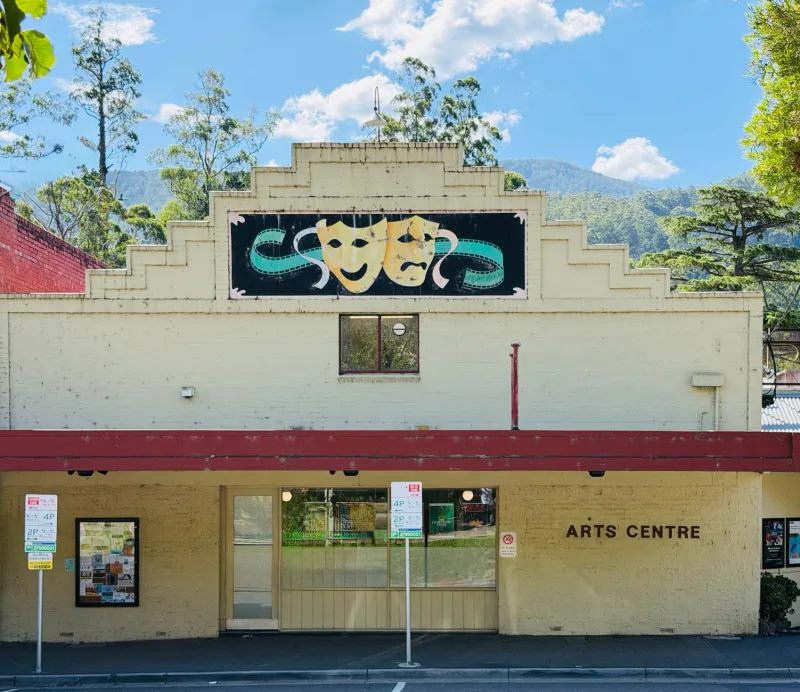
There's a particular kind of dismissiveness that regional artists know well. The raised eyebrow at a dinner party when you mention you're based in Bathurst, or Ballarat, or Broken Hill. The assumption — rarely spoken aloud but always present — that serious creative work happens somewhere else. Somewhere bigger. Somewhere with a better airport.
New Zealand has been quietly dismantling that assumption for years. And if you're an Australian creative working outside the capital cities, what's happening across the Tasman right now is worth paying very close attention to.
The Myth of the Creative Capital
Australia's arts funding and cultural infrastructure has long tilted toward Sydney and Melbourne. That's not a controversial observation — it's basically structural. The major galleries, the flagship theatre companies, the publishing houses, the music venues with international booking clout: they cluster in the big smoke, and the gravitational pull is real.
Aotearoa has a different geography, but more importantly, it's developed a different philosophy. With Auckland functioning as its largest urban centre but by no means its only creative hub, New Zealand has — partly by necessity, partly by design — built arts infrastructure that spreads outward rather than funnelling inward.
Places like Whanganui, Nelson, Ōamaru, and the Hokianga have developed distinct creative identities that don't position themselves as lesser alternatives to Auckland or Wellington. They're not trying to be smaller versions of the big city. They're doing something more interesting: they're being entirely themselves.
Whanganui and the Art of Institutional Depth
Whanganui is probably the most cited example, and for good reason. A town of roughly 47,000 people, it punches at a creative weight that would embarrass cities three times its size. The Sarjeant Gallery — a regional institution with a collection that would make some metropolitan curators quietly envious — recently completed a major redevelopment that signals serious long-term investment in arts infrastructure outside the main centres.
But what's more instructive than the bricks and mortar is the ecosystem around it. Whanganui has become a genuine destination for working artists, not just tourists. Affordable studio space, a functional artist residency culture, and a community that has made a conscious choice to treat creative workers as essential rather than decorative — these are the conditions that sustain a creative economy over time.
For Australian regional centres watching on, the lesson isn't 'build a gallery.' It's about the deliberate, long-game decision to make your town somewhere artists can actually afford to live and work. That's a planning decision as much as a cultural one.
Residencies as Regional Infrastructure
One of the most transferable models from New Zealand's regional arts scene is the artist residency — not as a prestige programme for established names, but as genuine working infrastructure for early and mid-career practitioners.
Across Aotearoa's provincial regions, residencies have become tools for community engagement, for keeping creative talent in regional areas, and for generating the kind of slow, place-responsive work that you simply can't produce on a city schedule. The Tylee Cottage residency in Whanganui, the residency programmes run through the Eastern Southland Gallery in Gore — these aren't footnotes to a national arts story. They're chapters in their own right.
Australia has residency programmes too, of course. But the NZ model tends to integrate them more deliberately into the fabric of local community life. Residents are expected — and supported — to engage with local schools, iwi, community groups, and businesses. The residency isn't a retreat from the community; it's a point of connection with it. That distinction matters enormously for the kind of work that gets made, and the kind of relationships that sustain a regional arts culture over time.
Culturally Rooted, Not Culturally Frozen
Here's where things get particularly interesting for an Australian audience. New Zealand's regional arts communities haven't built their identities around nostalgia or heritage tourism alone. The most vital of them are drawing on deep cultural roots — including Māori cultural frameworks and tikanga — to generate genuinely contemporary creative work.
The Hokianga, for example, is not a museum piece. It's a living creative community where whakaaro Māori (Māori thought and philosophy) shapes how local artists approach everything from visual art to music to community storytelling. That's not a heritage display. That's a living creative methodology.
For Australian regional communities — many of which sit on Country with profound cultural depth and living First Nations creative traditions — this is a genuinely generative model. The question it raises is: what would it look like to build a regional creative economy that draws on the living cultural knowledge of the Country it occupies, rather than treating that knowledge as backdrop?
It's a confronting question in many ways. But it's also one that New Zealand's regional arts communities are actively, if imperfectly, working through. And the creative output coming from that process is extraordinary.
The Economics of Local First
Sceptics will point to funding. And yes — New Zealand's Creative New Zealand agency has made deliberate investments in regional arts infrastructure that don't have a direct Australian equivalent at the federal level. The Australia Council funds regional work, but the structural commitment to distributed creative economies is arguably less embedded in the system.
But here's what's interesting: many of the most resilient regional arts communities in Aotearoa have built economies that aren't primarily dependent on central government arts funding. They've developed creative tourism, artist-led retail and hospitality, community-owned arts spaces, and cross-sector partnerships with local businesses and councils.
Ōamaru's steampunk arts scene — genuinely weird, genuinely wonderful, and genuinely economically functional — is a case study in what happens when a regional community decides to back a creative identity fully rather than hedging its bets. It's not for everyone. It's very much for Ōamaru. And that specificity is precisely what makes it work.
Australian regional centres are increasingly exploring similar models. The creative economy work happening in towns like Castlemaine in Victoria, or Margaret River in WA, shares some of this DNA. But the NZ examples offer a more developed playbook — one that's been tested across different scales, different cultural contexts, and different economic conditions.
What Australia Can Actually Do With This
The practical takeaways aren't complicated, even if the implementation isn't easy. Invest in affordable live-work space for artists before the rents climb. Build residency programmes that connect artists to community rather than insulating them from it. Take seriously the cultural knowledge that lives in your region — not as heritage to be preserved, but as living creative intelligence to be engaged. Back local creative identities with genuine conviction rather than cautious, hedged support.
And maybe most importantly: stop measuring regional arts success against metropolitan benchmarks. The goal isn't to be a smaller version of Sydney. The goal is to be an irreplaceable version of wherever you actually are.
New Zealand's regional arts communities have worked that out. The results are speaking for themselves — loudly, and from places you might not have thought to look.